Sharpen Your Left Brain
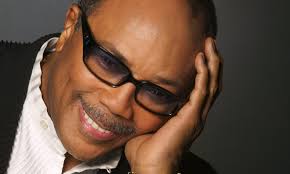
Featuring wisdom from Quincy Jones
One of the biggest myths about creativity is the idea that great art simply “appears.”
That genius is accidental.
That soul alone is enough.
That talent doesn’t require structure.
Quincy Jones completely rejected that idea.
In 12 Notes, Quincy explains that the greatest artists understand both the emotional and technical sides of creation. To him, true mastery lived in the balance between soul and science.
That phrase alone deserves a deep dive.
Because Quincy wasn’t talking only about music theory. He was talking about discipline. Intention. Preparation. Understanding why something moves people instead of simply hoping that it does.
At one point, Quincy writes:
“If you want to create art that invades the subconscious mind and leaves a long-lasting impact, you’ve got to have the proper blend of soul and science.”
That line feels especially important right now.
We’re living in an era where algorithms reward speed over depth. Everybody wants virality. Everybody wants shortcuts. Everybody wants the appearance of mastery without studying the craft behind it.
But Quincy reminds us that timeless work is rarely accidental.
There’s architecture behind emotion.
Even improvisation has structure.
Quincy explains that unrestricted creativity often leads to chaos because there’s no framework holding the ideas together. He compares it to music dynamics — fortissimo means nothing without pianissimo. Loud only matters because soft exists first.
That applies far beyond music.
A filmmaker needs editing rhythm.
A writer needs pacing.
A producer needs arrangement.
A storyteller needs tension and release.
A DJ needs sequencing and emotional timing.
Even freedom has structure.
One of the most powerful moments in this section comes when Quincy references a quote often associated with Pablo Picasso:
“You’ve got to know the rules in order to break them.”
That philosophy runs through Quincy’s entire career.
This is a man who studied orchestration obsessively. A man who learned jazz arrangements from giants. A producer who could move between Frank Sinatra, Michael Jackson, film scoring, bebop, funk, Brazilian music, and hip hop because he understood the mechanics beneath the emotion.
Quincy also talks about encouraging younger artists to study the greats deeply — not casually, but intensely. He believed that listening carefully to master vocalists trained your instincts before you ever stepped onstage yourself.
And honestly?
That may be one of the missing pieces in modern creativity.
Consumption has replaced study.
Scrolling has replaced immersion.
People sample aesthetics without learning foundations.
But Quincy believed mastery required obsession.
He even compares creativity to baking: if you want freedom in the kitchen, you first need to understand ingredients, chemistry, combinations, reactions, and balance.
That’s the “left brain” he’s talking about.
Not becoming robotic.
Not losing soul.
Not creating art without feeling.
But strengthening the technical side enough that your soul can communicate clearly.
That’s a major distinction.
Because Quincy never separated intellect from feeling. He saw them as partners.
And maybe that’s why his work lasted across generations.
The emotion was real.
But the structure underneath it was undeniable.
At the end of the chapter, Quincy writes about constantly feeding the brain — puzzles, study, curiosity, exploration. He believed creativity was a muscle that had to stay active.
“Use it or lose it.”
Simple. Direct. True.
And maybe that’s the real lesson of Note D:
Study your craft deeply enough that inspiration has somewhere to land.
Because soul without discipline fades quickly.
But soul supported by knowledge?
That becomes legacy.
Quincy Jones, 12 Notes on Life and Creativity can be purchased here! Click the link!


Leave a Reply